Show Notes
Introduction
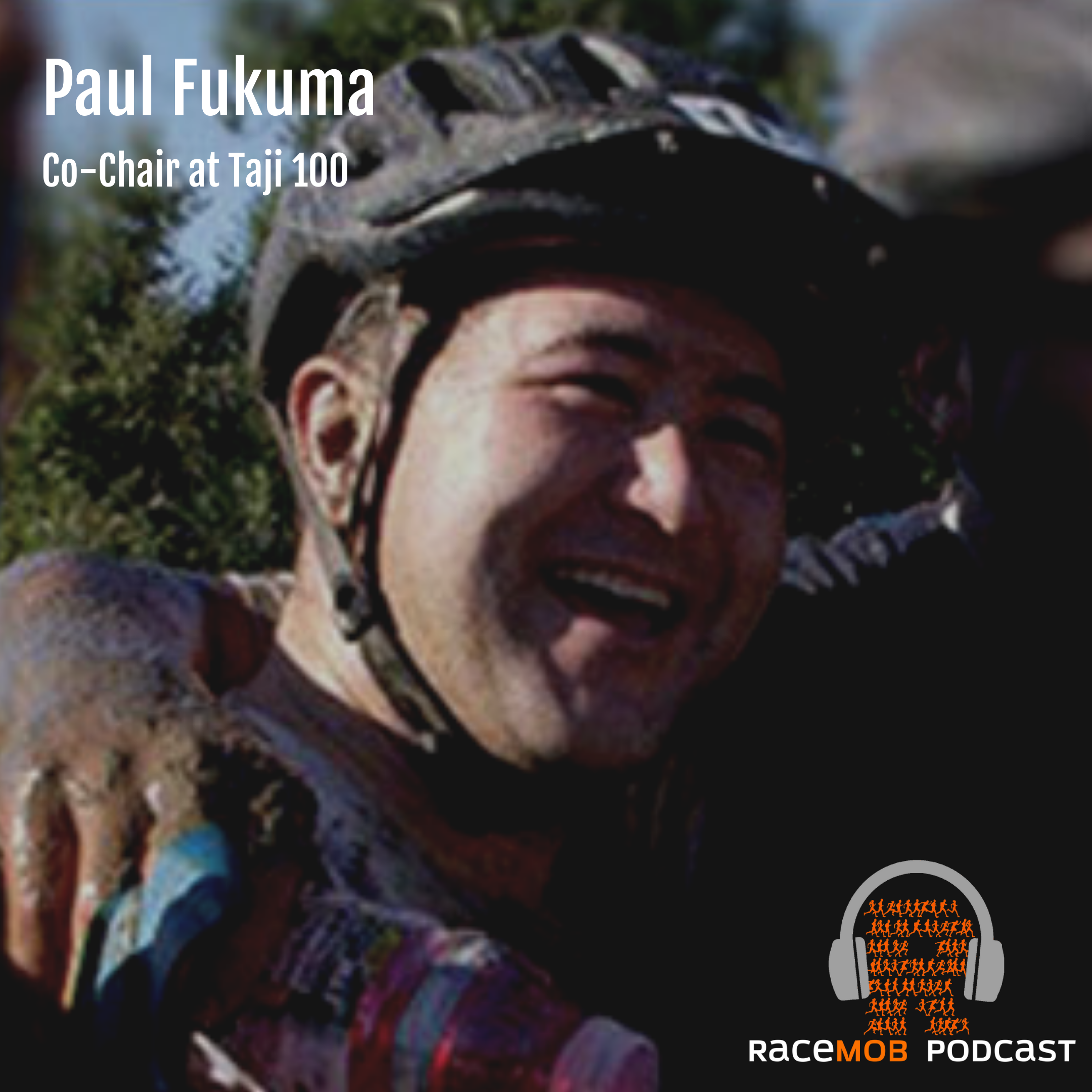
We’re so excited to welcome Paul Fukuma to the podcast. Paul’s a fourth generation army veteran, who brought a friendly little month-long 100 mile competition - the Taji 100 - stateside. Paul's the chairman of the Taji 100 fitness challenge that takes place every year in February.He was part of the event in its inception in 2010 at camp Taji. And under his leadership, this event has grown exponentially and has raised over $300,000 supporting military families.
Not only do we get into Paul’s background, and his experience - in camp taji Iraq for the first ever Taji 100 event. But we also talk about the inspiring stories of participants of the years, and the reason that Paul’s been doing the event year after year - spending hundreds of hours and not taking a cent.
We also dig into another topic, to understand Paul’s unique perspective. Paul is a public safety officer - which means that he wears three hats - as a police officer, fire fighter, and EMT.
And as you hopefully recognize - we’re currently in a critical moment in time. Political tensions are running high and the world may seem more divided than ever. There’s been a large focus on systemic racism and even calls to defund the police.
So I wanted to get Paul’s take. I didn’t give him any advanced notice - but his honest answers were refreshing and real - and I just appreciate him so much for it. You guys are going to love this conversation - and if you want to improve your health and raise money for an amazing cause - I encourage you to participate in the Taji 100 this February.
During this discussion, we talk about:
- 3:38 - Paul's childhood - growing up in the Bay Area, and his family's military background. - 7:16 - His deployment to Camp Taji Iraq - 10:45 - The initial Taji 100 challenge, and Paul's involvement in it - 17:39 - Bringing the Taji 100 challenge back stateside and the initial years of running the challenge - 21:38 - Partnering with RWB Team Red, White, and Blue - and the relationship between the organizations - 26:41 - How Bertrand and Paul met, and how Taji 100 started to grow - 29:32 - The incredible stories that have come from the Taji 100 challenge - 37:22 - The behind the scenes support that goes into every Taji 100 event - 40:11 - Paul's current position as a public safety officer - and his day to day duties - 43:43 - Paul's recent accomplishment getting his bachelors and masters degrees - 44:55 - His take on the political climate, social unrest, and calls for police reform - 53:15 - Info on Taji 100 - 2021 registrationLinks Talked About During this Show
- Signup for the Taji 100 Fitness ChallengeTranscript
[00:00:00] **Paul Fukuma:**
If you can just have a moment to genuinely say yes, change my mind. I am willing to have my mind changed. Not to say that you will, but if you're willing to have your mind changed, if you've pretty surprised, what kind of information and what kind of voices you'll hear and what perspectives you'll be able to take in.
[00:00:18] **Bertand Newson:**
Hello and welcome to the RaceMob podcast. This is episode number 81.
I'm Coach "B" founder of two legit fitness co-chair of Taji 100, 80/20 Endurance Foundation, Coaches of Color Initiative, and RRCA certified coach and USA certified official. I'm joined by my brother from another mother and new father, Kevin Chang, entrepreneur technology and fitness nerd, and the founder of RaceMob.
We are so excited to share a RaceMob rewind and one of our most popular episodes featuring Paul , chairman of the Tasha 100 non. Fitness challenge that takes place the entire month of February with the goal of achieving 100 miles or more in 28 days last year, with the help of the RaceMob family, we helped raise over $100,000 benefiting the military charity partner of this.
Team RWB enjoy this replay and you can sign up for the 2022 ties you one [email protected]. Fantastic bling, cool camouflage shirt, and a mission that will keep you motivated all month long without further ado. Here's our episode and conversation with Paul.
Hello race mob family. We're in for a real treat today, we have the one and only Paul Fukushima, a hero amongst heroes, someone who served our country well in the army, someone who has been a man of the community as a firefighter, as a. Police officer as a instructor in the fire Academy and police Academy, the chairman of the Tazi 100 fitness challenge that takes place every year in February.
He was part of the event in its inception in 2010 at camp Taji. And under his leadership, this event has grown exponentially and has raised over $200,000 supporting military families. Paul is our great honor, our great pleasure to welcome you to the race mob family, and to share your story.
[00:02:26] **Paul Fukuma:**
an incredible honor to be here. I must admit I am a little nervous, my very first podcast. So this is all foreign territory to me. When you advise me on here, I wasn't quite sure what to expect. So this is definitely an issue experience.
[00:02:40] **Kevin Chang:**
Well, nothing to be nervous about. I mean, I think, you know, you're a good hands with Bertrand me. We just want to get to know you a little bit better and be able to share your story with our audience. As I understand it, you are Bay area native. Is that right? Did you kind of grow up in the Bay?
[00:02:57] **Paul Fukuma:**
Yeah, by mother, father sell down kind of West San Jose. And that's where I was raised about six or so. they divorced when I was real young. I don't even have memories of them being together. But it wasn't the greatest neighborhood in San Jose and it was starting to go downhill pretty fast. So mom recognized that.
And so she got me out of there and relocated me to Sunnyville when I was like the fifth grade or so. And that's all I remember is, so I could say I was born and raised Sunnyvale that's community that I've known ever since South Bay is what I know that's about it.
[00:03:30] **Bertand Newson:**
And Sunnyville, I mean, not to steal anyone's thunder, but that city is very special to you for many reasons. So we'll kind of hold onto that and plant those seeds. and the good work that you're doing in that beautiful various city in Sunnyville that you call home.
[00:03:46] **Kevin Chang:**
Tell us a little bit about the military background. I know that it kind of goes back in your family. Fourth generation. Is that right?
[00:03:54] **Paul Fukuma:**
I'm the fourth generation us army. My great grandfather on my mother's side was. World war one, both grandfathers will work to both my mother's side and my father's side, which was Japanese. So that has some significance to my father, Vietnam. And then for me, Iraq was pretty interesting. So I didn't really know much about my family's military lineage growing up.
I mean, I knew that all of them were in it. I knew all of them served, but it really didn't. How much meaning or impact to me until I made the decision to enlist and what's, I don't know it was interesting or not, but I enlisted completely separate from that motivation. It wasn't like, Oh, I want to continue this path.
I decided to enlist. And it's only then that everything started to come to the surface and I realized how significant. The military was in my family. So my father's side is Japanese. My grandparents on that side were put in camps during world war two. And during my grandfather's stent in there, he volunteered to translate Japanese code and language for the military.
And then once released. He wanted to prove how he loved America and love United States. He enlisted in the service test to show no resentment, hard feelings. Like, no, I believe in this country and to prove it, I'm going to be a staff Sergeant United States army. Yeah. It's a pretty significant. And despite all that, my dad was in college.
He could have easily avoided the draft, but he also said no, people are serving. And I need to do my duty as well. So he voluntarily went down to the recruiter and enlisted. He went to Vietnam. He earned two bronze stars while in service, as a radio operator for an infantry unit. And then, I decided to enlist in 2002.
Yeah. Shortly after nine 11 instant. And. I want to do something pretty significant. So I went in the medical realm and became a combat medic for the army and served four years active. That was very proud chapter in my life. For sure. I got out in 2006, got recalled actually, for those who don't understand military service, you have, let's say you were to enlist right now.
You get four years active service and then there's another four years after that. Where they kind of still have you on retainer. So at any time they could just say, Hey, remember that thing you did a few years back. Yeah. I'll come on back in again.
[00:06:18] **Kevin Chang:**
Wow.
[00:06:18] **Paul Fukuma:**
Yeah. I would just sit in my house or my apartment and my old man.
My dad calls me and says, "Hey, Paul, uh, I just, uh, signed this FedEx package for you from the department of defense." "You did what? Did you sign for
[00:06:32] **Kevin Chang:**
that?
You
[00:06:32] **Bertand Newson:**
new what it was?
[00:06:36] **Paul Fukuma:**
And I already knew what it was I already knew was going to be, and sure enough, it was ordered to come back in. So they sunk their teeth into me, pulled it back in and deployed me for a 14 months stint over in Iraq.
[00:06:47] **Kevin Chang:**
And that was 2008. Is that right? 2009. Wow.
[00:06:52] **Paul Fukuma:**
Yes.
[00:06:53] **Kevin Chang:**
So first four years, was that also Iraq?
[00:06:57] **Paul Fukuma:**
No, that was all state side. I worked out in good old Georgia. My first taste of the world outside of the bubble, that is the Bay, Jamie, a true taste of how.
[00:07:12] **Kevin Chang:**
Okay.
[00:07:13] **Paul Fukuma:**
Diverse, we'll call it. This country truly can be. Yeah, there's a lot of countries within this country. And if someone that has never been outside of California or even, especially the Bay area, it's very, they have their eyes open and should start traveling and checking out. It's no different, get a new perspective and you spend a long period of time just in a different state, let alone a different part of this state.
[00:07:34] **Kevin Chang:**
Tell us about that second stint, 2009. So you've been recalled, I guess the first stance you were stateside. So you didn't really have to go overseas. What was that feeling like of being called overseas? And were you nervous? Scared.
[00:07:49] **Paul Fukuma:**
Scared. I was, I think in my mind it was always something that I wanted. I think I missed out on, or I didn't do my full duty as military. Enlistee those kinds of. Topsy turvy had already established a career. I'd already been an officer with sounds a police for four years at that point. So I was already living my life.
Like I thought I'd closed that chapter and I'm starting a new one. And then it just kind of turned into a Quentin Tarantino film, or I just. Started jumping back chapters and back and forth. So I'd put everything here on hold, put everything in storage. So it definitely was Catherine wrench in the mix for plants, but I didn't find it.
I was actually pretty excited to go to do this and. Well, yes, a deployment sucks. There's just no way else to describe it, but we're very proud of the experience. I learned an incredible amount, the experience I gained, the knowledge I obtained, I could never, ever have acquired that. Had I not deployed. I have some lifelong friends that hopefully we'll stay in touch long into our elder years.
So it's been a powerful experience. And of course, ultimately that series of events has brought us to today and Taji 102, a Git and race Bob and all my friends in hair. So I got to say it was a good path to take.
[00:09:06] **Bertand Newson:**
We salute and thank you for your service. And, you know, let's talk about 2010 and camp Taji, army base, and the morale at the time, looking at things through your eyes and how Taji got on your radar.
[00:09:23] **Paul Fukuma:**
of the bigger problems that deployment is. Yes. You have the enemy, right? The bad guys with the bad guys, ladies with guns, but that's a small percentage that the bigger threat is boredom. Boredom is a big problem. Our Sergeant major, when we got landed in country, he said, when you leave country, you're either going to bench press 500 or way 500.
[00:09:45] **Bertand Newson:**
Yeah.
[00:09:47] **Paul Fukuma:**
that's
true. Because, you know, either they're going to sit around and eat and be bored and not do anything and have a kind of life, or are gonna take advantage of the opportunity because you don't have TV. You have very ancient, like stone-age ancient internet just for emails. So you can't surf the web or do anything.
There's no outside distractions other than just your little tiny community here. So you really have an opportunity if you wanted to really maximize on your fitness and health. So morale is kind of low because let's face it in a lot of these units. You have 18, 19 year olds that never been away from home.
And now they're shipped halfway across the world in a combat environment. So. They need distraction. Right? So a captain within our unit, Carol Pardot, she sees an opportunity to capitalize on the cardiac, this heart health month of February.
And she's like, Hmm, what's the militaries answer for morale, making everybody a run, but really. does a one 5k really do, right. Okay. Yeah, we ran. So we had something to do this morning and now we're back to the board again. So she thought the idea, what if we have a month long challenge as the shortest month of the year and say a hundred miles, let's see if you could knock out a hundred miles at a 28 days, some people were naysayers and they're like, Oh, what a great recipe for stress fractures?
But ultimately it was a great experience because we found there's a lot of competitiveness and obviously type A personalities in the military. Right. It gave us something to focus on something to do, or always keeping track of stuff. It's something to look forward to the next day to try and knock out more things.
Health wise, people are getting in great health and they had something to look forward to. It's funny, I was 10 or 11 months into my deployment. I had not come home on RNR yet. Almost every else in the unit had, but I was planned to come home for my 30th birthday in March. So I had to leave cause it takes quite a few days to travel from obviously Iraq back to the States.
So I had to leave about a week early, so I was like, Ooh, if I do this, I'm gonna have to do this 21 days.
[00:11:53] **Bertand Newson:**
Wow.
[00:11:57] **Paul Fukuma:**
Um, but I did it, uh, I was very sore afterwards, but I did it and it was quite an accomplishment and we were talking about it constantly after it was all said and done. Yeah. So that was in, in Taji, Iraq. That's where we were stationed, which the little base just Northwest of Baghdad, like a 15 minute helicopter ride Northwest of Baghdad.
Wonderful place.
[00:12:21] **Bertand Newson:**
Okay.
[00:12:23] **Paul Fukuma:**
I got to tell you the only two good things I liked about Iraq was the sunrise and the sunset, because the there's so much dust and smoke in the air. It makes the most beautiful oranges and reds I've ever seen. But the 23 hours spread between the two moments.
[00:12:43] **Bertand Newson:**
Okay.
[00:12:44] **Paul Fukuma:**
Yeah. That was not beautiful in any way.
[00:12:48] **Kevin Chang:**
Well, tell us a little bit about where did you guys run? Did you guys run inside the base? Were there like pathways and stuff? And what types of shoot were you running in boots or did you guys have running shoes?
[00:13:00] **Paul Fukuma:**
It's kind of hard to picture. I mean, you're in Iraq, it's a theater of war and you're out for a run. Well, the fog we call it a fog fort operating base is actually pretty big. And so there's, if you were to run, you can run pretty much t-shirt shorts in the center of it and be free or somewhat free of concern of things being shot over the wall to come get you.
But we also had hardened structures. So there was these gyms. They had steel reinforced concrete walls, all the way around and big steel roofs and stuff. So if mortars and things came over, we'd have some shelter protection. So we'd wear our armor walk all the way over to this gym. Kind of dump it off at the door, go in there and lift some weights.
Scott treadmill run around a little bit, get sweaty, but then put our little gear back on him. Walk off to our living quarters. It was interesting for sure. It's not like going to a gym here, like, Oh, I'll just wear this nice workout shirt. No,
[00:13:59] **Kevin Chang:**
And I guess before Taji, were you a runner, would you consider yourself a runner before then?
[00:14:05] **Paul Fukuma:**
I wasn't actually, I hated running with a passion. I was trying to be the more of like, well, my Sergeant majors said I can lift 500 pounds. I'm gonna beat that guy. So I tried really hard to do a bulking upper thing, and I looked back and yeah, my brute strength was through the roof, but I was also super heavy and had no cardio or no stamina, no endurance.
And it wasn't a good feeling for me, but when I started getting into this, I wasn't never been a fast runner, never been crazy and speed. I can't do, you know, five minute miles around like that, but I was able to experience that thing called a runner's high that little Zen moment where yeah, the first two miles suck and everything's tight and everything's stiff.
And you're like, Oh, I God, how many more of this? Right, but then there's that middle part where you just kind of zone out and you're in your, like your happy place. And that's what was great for me in Taji or during the 100 is I have for an hour, two hours, I would completely forget where I was. I would just be on a treadmill and I would, zone out I have my little earbuds and scrapped from whatever CDs I can find.
And I would completely drift off into fantasy land. Completely forget that I was in Iraq. Completely forget that I was thousands of miles away from my friends and family completely forget about all the stresses of the job I was doing over there. And it was my escape. That was my escape. Those two hours of just want to treadmill just cranking out miles.
And then after it was done, I was, I was almost like, man, I have to stop now. Uh, And then I look forward to the next day. Yay. I get to go out to my happy place and I'd go back to the gym.
Yeah. So it's definitely an interesting thing. We try to have a few half marathons there, but it's challenging when you're restricted to not Armour running in a very small environment.
[00:15:57] **Bertand Newson:**
Track your miles from there.
[00:15:59] **Paul Fukuma:**
So Carol decided, well, the whole way we track is we would email her all of our miles. So every day she would have, I can't, I wish I knew how many, I wish I could have the original documents, but it must've been a hundred soldiers emailing her every day, their miles and stuff. Right. And so she would have this big group email and then have to email all of us every day to show us kind of the stats, like the spreadsheet of what's going on.
Right. But ultimately she always had a big disclaimer, Hey, I'm just a doctor. I'm not a mathematician. So if I mess up your fault, you checked it miles, which you got remind me of later. Cause that brings up a pretty funny story about our first year Taji state side, too.
[00:16:41] **Kevin Chang:**
Let's bring it back. Stay sides you were deployed for about 14 months, you said. And so that was a couple of months after Taji.
[00:16:50] **Paul Fukuma:**
Yeah. So came back and, you know, really trying to get back into civilian life was that harder than I thought, you know, I thought like I just jumped right into it, but that's not true at all. There's definitely a growing period to try to get back to just a normal flow, everything from, you know, having to pick out clothes to wear.
I mean, I didn't have to pick out what I had to wear every day. It was a uniform, right. And, Oh, I got to pay bills now and I got to put gas in the car or something like that. You know, that's deal with any of that.
So it was definitely had some growing things and I miss the comradery that is grown through a deployment.
You really become tight with people around you. You find that everyone needs to find something in common with each other, and really become a really tight knit community. Because you're all that you have. Right. And they have each other and that's it.
So I decided to do a kind of informal Taji, 100 state side, maybe a dozen people from the unit.
And so a lot of people that I knew that were interested in doing it, and it was literally paper and pen, you know, people would email me or something and I'd write it down and I'd keep a little kind of handwritten spreadsheet and. It was kind of fun, you know? Uh, it felt good and keep in touch with people, but I thought, you know what?
Maybe this could be a little bigger. Let's see where it goes. I bought a godaddy.com website and register a URL. I've never done any of that before I had no idea I was doing, and I got some stock images and some cut and paste stuff and put my little Facebook page. And before I knew it, I had, how many, B? Like, 200 people, maybe?
[00:18:23] **Kevin Chang:**
Wow.
[00:18:24] **Paul Fukuma:**
And it was completely organic. I didn't advertise or anything. It's just, Hey, everybody check this guy's event out. And 200 people every day, Kevin, would email me their miles and I would keep a spreadsheet, an Excel spreadsheet. I have no idea how to do all that mathematics and spreadsheets and computer
[00:18:45] **Bertand Newson:**
Wow.
[00:18:48] **Paul Fukuma:**
I spent probably two to three hours a day, updating spreadsheets and updating the website because I would actually get people emailing me angry. Paul I've just emailed you 42 seconds ago. Why? I don't see my miles on there.
[00:19:03] **Kevin Chang:**
I see Bertrand covering his mouth.
[00:19:08] **Paul Fukuma:**
So here I am. Back in San Jose PD and I'm like working and I'm trying, I'm dealing with like dangerous people and I'm trying to like get criminals in the jail. And
I'm constantly these text messages. Why aren't you updating the website yet? Kind of busy right now, you know?
[00:19:26] **Bertand Newson:**
Yeah.
[00:19:28] **Paul Fukuma:**
But it was overwhelming. How many people found it inspiring to them?
Not just a fun event, motivating and inspiring. And I thought I never meant it to be an inspirational thing. How interesting that this thing can inspire people. I had one person come and tell me that she suffered from horrific migraines. Just this debilitating migraines. We're talking two days a week, just completely incapacitated by migraines.
Okay. Medicated the whole bit. And she told me that she tried it. She would go out when she could, and she got more active and more active and it spawned a new passion, her to be active. And by being active that way, she had reduced all of her headaches and migraines down to once a month or even less. Just by instilling an active lifestyle into her that she never thought she could do before.
And I thought to myself, all that work, even if it all fails, it helped one person that meant a lot to me. Bertrand said, Hey, let's get together and make this kind of bigger thing. Let's start making some, t-shirts like, Oh my gosh products. We're going to start selling products now. Oh, okay. This is getting pretty serious.
All right.
[00:20:38] **Bertand Newson:**
Blame Becky on that one.
[00:20:40] **Paul Fukuma:**
Oh yeah. I'll play Becky on that one. Yeah. And so. We started doing that and it really snowballed. We started realizing we're getting bigger and bigger. So we've started looking at the legalities of it became five Oh one nonprofit. We started trying to tie ourselves with bigger organizations.
Now what's interesting about Taji is this. I have no idea how we survive this long because those first few years, when we tried to raise money for military charities, I don't want to cuss on her program, but it was a garbage show. All right.
We've got to have people register with us. You had to register with an online tracking service, a different kind of running site, and then you had to register with the charity to donate.
So you had to go to three different websites. Just to participate in all this matter. And yet somehow we had people continuing to return and Bertrand said to me, Paul, that should tell you how significant this event is that people are willing to go through and jump through all those hoops and go through this huge process.
Just to take part in this, I should tell you how significant this is and how much it would impact you really having on people. And I never thought about it like that. It made a lot of sense. We continued to grow and we partnered up with a military charity and we thought we were doing good. They end up getting into some hot water for some mismanagement of funds.
So we had to kind of distance ourselves from them. And then, uh, we found RWB team red, white, and blue. And I don't think we could have found a better fit for our mission.
And for those who don't know about team red, white, and blue, I'm gonna give a little quick plug to them. They take military service members who are coming out of the service and try to assimilate them and teach them how to be part of society again, which I can tell you from personal experience, is a much needed program, right?
We're talking leadership trainings and camps, counseling services, the gamut, whatever someone may need to try to come back to civilian world, they provide it and then they do it in an athletic media. Like, Hey, let's go off for a run. The squad for an athletic event and what we're doing it, let's talk, is that a shot and see what we can do to get you on the right path?
You know, that's huge. That's perfectly aligned with who we are, where we've been, where we came from and what we want to do. They're very open with their funds are very transparent. And so their honesty and integrity is through the roof. I can't speak higher about them. And anyway, so I feel very honored and blessed that they'd be willing to partner up with us.
And support us and our efforts to help support them. And in turn, trying to give back to the thousands of women and men who are currently serving and who have served to try to get back to their families and be a part of society again.
[00:23:19] **Kevin Chang:**
Well, yeah, and I know, I see RWB on the course all over the place. I know I've met a couple of them a year. Definitely during my marathons. I'm always falling behind, I think like Scott cruise shanks up here in San Francisco and, and. I mean, they always have such a big crew. I seem to remember a lot of them participated in Taji kind of in some of those early years.
Is that kind of how you guys met?
[00:23:43] **Paul Fukuma:**
It is, it is, uh, several of their members are became part of Taji and they recognize how awesome this was. And when we started looking for a new chair, they seized the opportunity to make the introduction. And that really just set a wildfire chain of events. They were, do I blew as reach out to all their chapters nationwide and we've grown exponentially.
I mean, I think we hit how many, B 6,000 or so people worldwide, not Countrywide worldwide. And just this last year we cumulatively run enough miles to go to the moon and back. And the 28 days, I mean, that's. That's staggering, absolutely staggering. And we're able to raise enough money in those 28 days to write them a check for $74,000.
[00:24:29] **Kevin Chang:**
Oh, wow. .
[00:24:29] **Paul Fukuma:**
That's after all the overhead, all the fees and everything. Here's a check for 74,000 and change. That's more than many people make an entire year, and we just did it in a month.
[00:24:39] **Kevin Chang:**
If you like our podcast and sign up for our newsletter, where we give you weekly tips on how to run your best race and have fun in the process. Just go to RaceMob dot com and sign up today.